

Approaching Winter Storm Triggers Stress for Many: Experts Explain Why and How to Cope
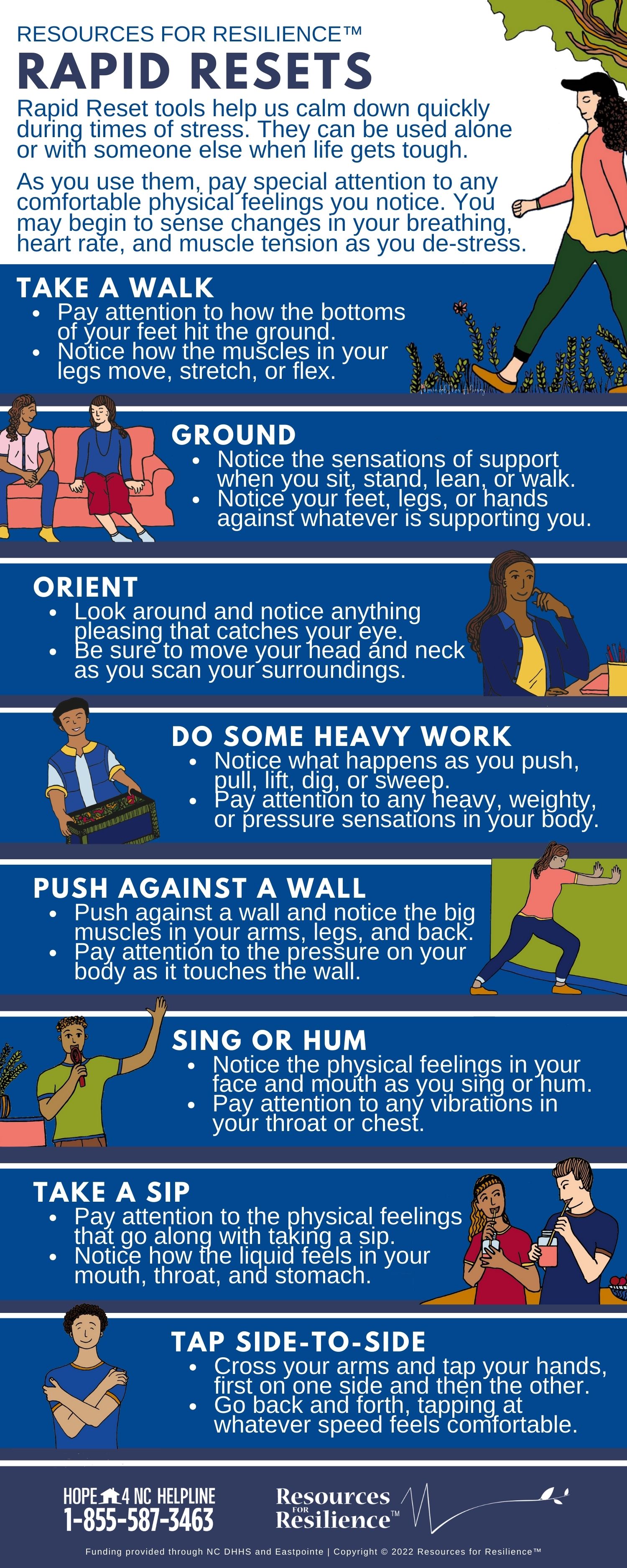
Rapid Reset tools help us calm down quickly during times of stress.
Our bodies and brains are excellent at remembering past stress and scanning for future danger. That is exactly what they are designed to do.”
ASHEVILLE, NC, UNITED STATES, January 23, 2026 /EINPresswire.com/ -- As headlines intensify around an approaching winter storm and preparation becomes increasingly visible across the country, many people may also be noticing stress in their bodies and minds. Racing thoughts, physical tension, heightened alertness and emotional swings are common reactions.— Ann DuPre Rogers, executive director of Resources for Resilience
For many, moments like this are powerful reminders of past experiences with severe weather and natural disasters. While every storm is different, the sights, sounds and uncertainty surrounding preparation may bring up physical, emotional and mental reminders that feel immediate and real.
“Between the headlines and the visible preparation happening around us, it makes sense that people are feeling on edge,” said Ann DuPre Rogers, executive director of Resources for Resilience, North Carolina-based nonprofit that supports communities responding to or recovering from the emotional impacts of extreme events. “Our bodies and brains are excellent at remembering past stress and scanning for future danger. That is exactly what they are designed to do.”
Weather unpredictability may heighten stress and a sense of helplessness, particularly for individuals who have experienced prior trauma. “When stress levels rise, small actions can make a meaningful difference,” Rogers said. “The goal is not to shut the body’s response down. The goal is to help it settle once safety is established.”
Resources for Resilience teaches a set of science-based, body-focused practices called Rapid Resets. These actions help the body recognize safety through repetition and small, intentional pauses. Over time, these moments signal to the brain that the immediate threat has passed.
When people notice signs that they are outside of their resilient zone, such as a racing heart, shallow breathing, muscle tension, racing thoughts, numbness or heightened sensitivity, these actions may help bring the nervous system back into balance:
• Move your body: Take a walk, march in place or engage large muscles by pushing against a wall or lifting something heavy. Movement helps discharge excess stress energy.
• Ground yourself: Sit, stand or lean on something solid. Notice the support beneath your feet, legs or back and allow your body to soften into it.
• Orient to your surroundings: Slowly look around and name a few things you can see or hear. Turning the head and eyes helps the brain reconnect to the present moment.
• Use rhythm: Gently tap the body side to side, sway or rock. Rhythmic movement supports calming pathways in the nervous system.
• Engage the senses: Take a slow sip of water or a warm beverage. Notice temperature, texture and taste as it moves through your body.
• Use your voice: Hum, sing or exhale with sound. Vocalization may stimulate calming responses and ease tension.
“These actions work because the brain and body settle in response to sensation, rhythm and support,” Rogers said. “They may be especially helpful for children, who often express stress through behavior rather than words. Walking together, tapping rhythmically, or noticing colors in a room may help children feel safer. When caregivers slow themselves down first, it sends a powerful signal of safety.”
Free programs, educational resources and additional Rapid Reset tools are available through Resources for Resilience to support individuals, families, caregivers and communities navigating stress related to extreme weather and other challenges. More information is available at www.resourcesforresilience.org.
About Resources for Resilience
Resources for Resilience is a trauma-informed nonprofit organization dedicated to strengthening individual and community resilience through education, connection and evidence-based nervous system regulation tools. Serving communities across North Carolina, the organization partners with individuals, families and organizations to support recovery from adversity and promote long-term emotional well-being.
Sarah Staley
Resources for Resilience
+1 650-804-2293
sarah.staley@resourcesforresilience.com
Visit us on social media:
LinkedIn
Instagram
Facebook
Legal Disclaimer:
EIN Presswire provides this news content "as is" without warranty of any kind. We do not accept any responsibility or liability for the accuracy, content, images, videos, licenses, completeness, legality, or reliability of the information contained in this article. If you have any complaints or copyright issues related to this article, kindly contact the author above.
